Why this didn’t exist before

Strength is how much you can move. Power is how fast you can move it.

The difference between catching yourself and breaking your wrist.

Strength × Speed = Power

Power is your ability to generate speed against a force.

Resistance × speedPower can only be measured while resistance holds constant.
Off a straight line, it can’t beEvery cable or weight changes resistance as you move.
Proteus holds it constant in 3DIn every direction, at any speed.
Step one · on a line

To measure power, resistance has to stay constant while you move.

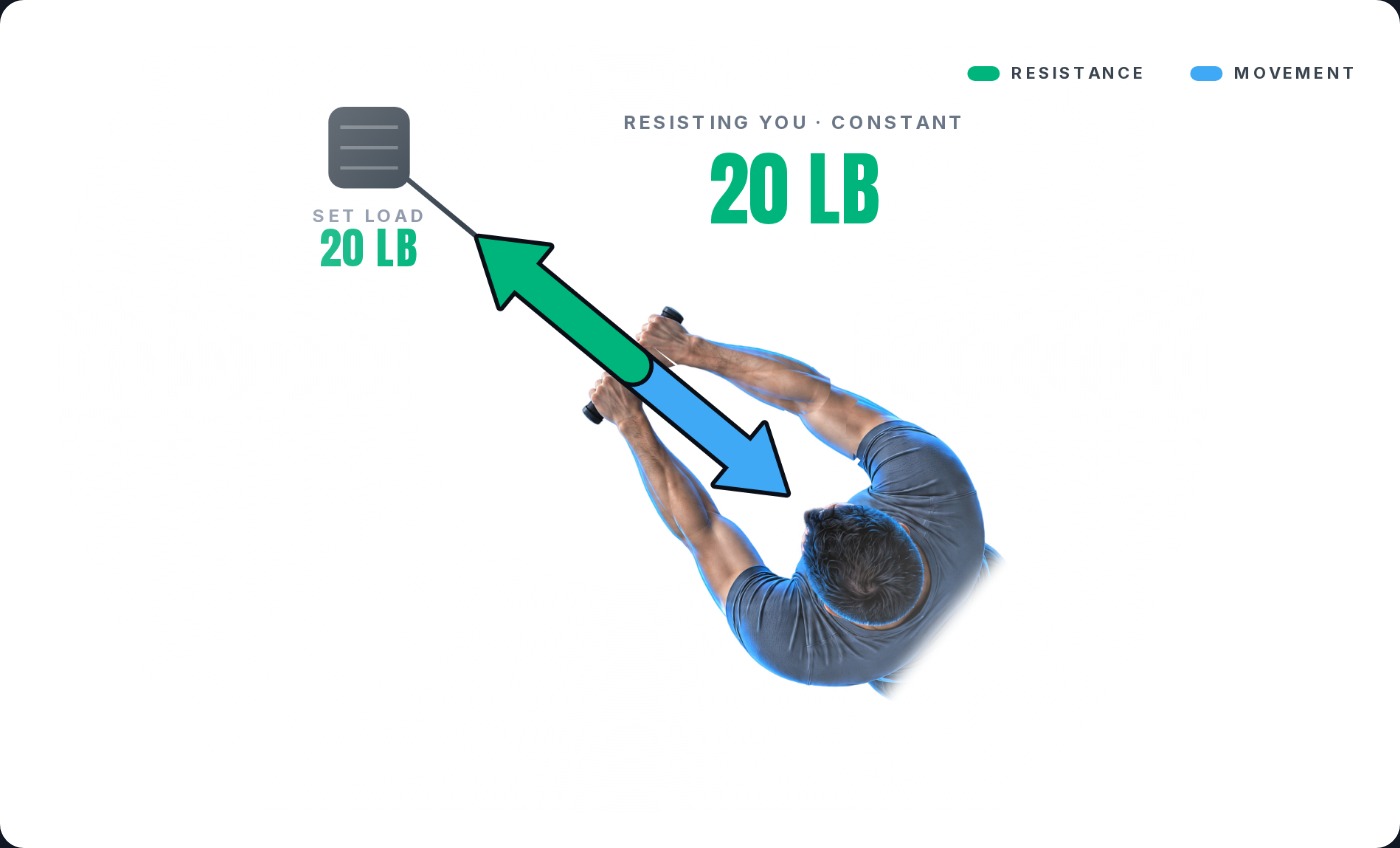
On one straight line, power is easy to measure—because the force is constant.
A cable machine · on a line
A cable machine on a line: 20 LB constant resistance.
Resistance · constant20 LB
×
Speed · measured live0.5m/s
=
Power · measured44W
Step two · off the line

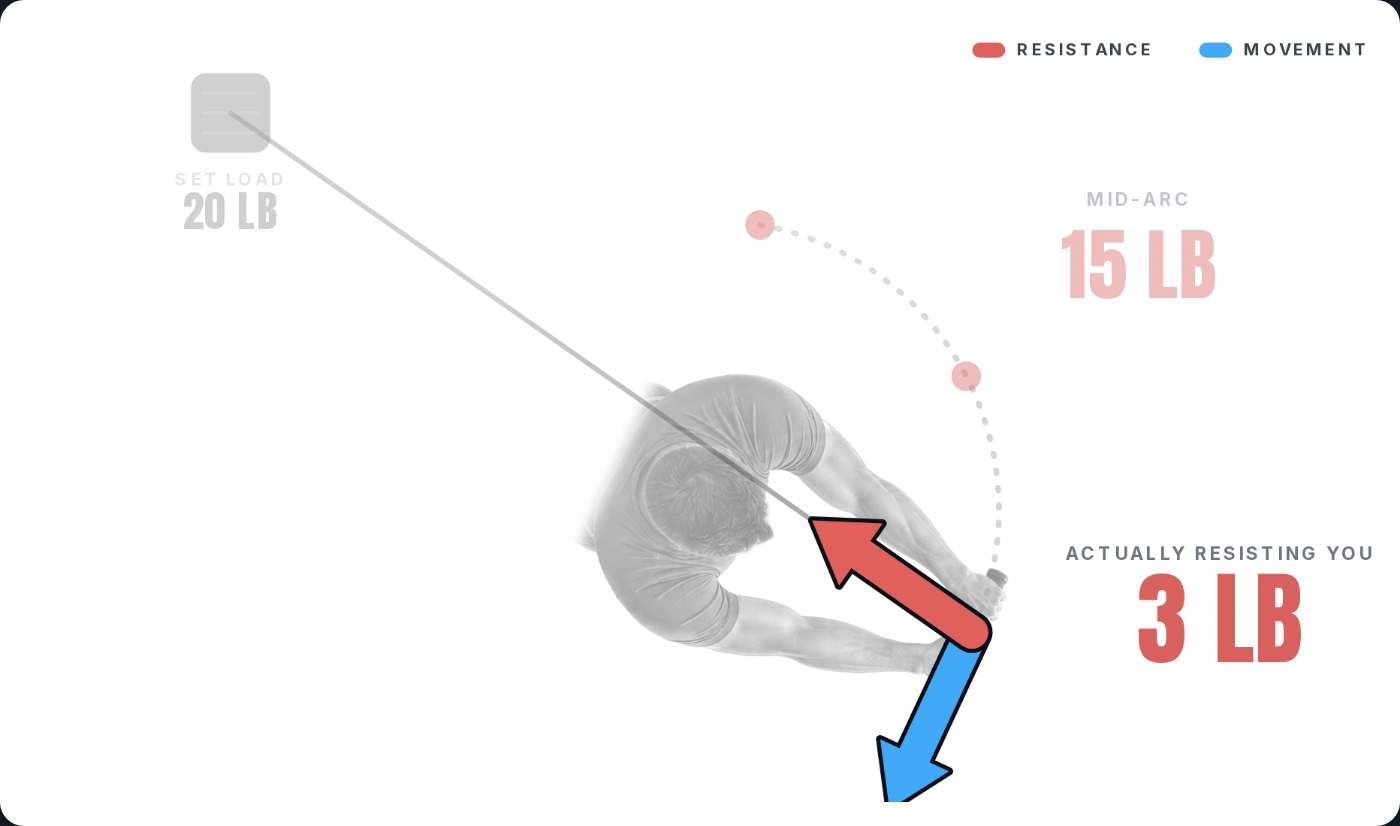
The moment you leave the line, power can’t be measured.

By the end of the movement the force has fallen from 20 lb to 3 lb. Speed is still easy to measure. Multiplied against a force that keeps changing, it tells you nothing.

A cable machine
Cable rotation: 15 LB mid-arc and 3 LB by the end of the movement.

Same rotation, seen from above · power = resistance × speed

Step three · in 3D

In 3D, no cable or weight can do that.

Same movement, two machines. Watch what each one is resisting with.

A cable machine
Proteus

Same rotation, seen from above · power = resistance × speed

What Proteus built

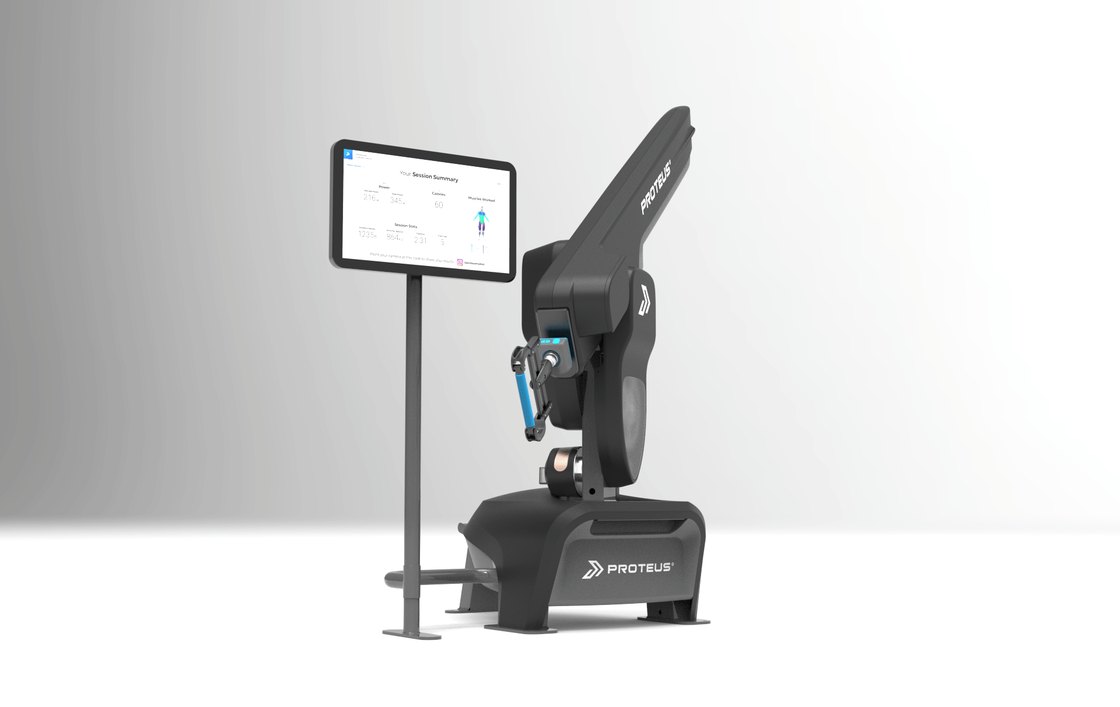
The patented arm holds resistance constant—in every direction, at any speed.

The first standardized measurement of power in 3D. Users describe it as moving through water you can make as thick as you want.

Proteus patented arm.
3D Resistance, explained · Proteus Motion